Pinyin: Buguzhi
Aliases
Poguzhi, Poguzhi, Buguchi, Heiguzi
Source
1. For kidney deficiency: Buguzhi 10 g, decoct in water and take orally. 2. For diarrhea: Buguzhi 6 g, grind into powder and take with warm water.PsoraleacorylifoliaL. dried mature fruit.
Botanical Description
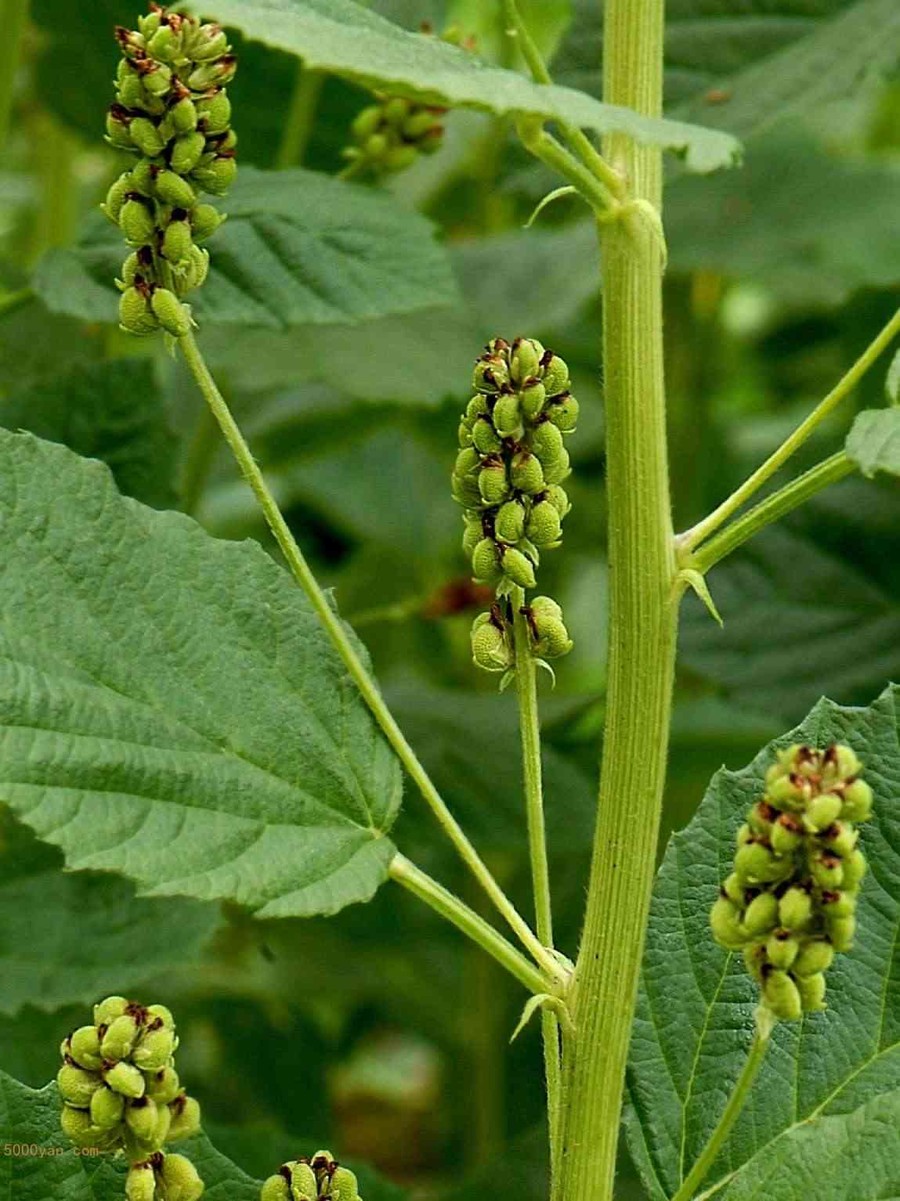
Annual herb, 60-150 cm tall, branches hard with longitudinal ridges; entire plant covered with white pubescence and blackish-brown glandular dots. Leaves simple, alternate; petiole 2-4 cm long, covered with white tomentum; stipules paired, triangular-lanceolate, about 1 cm long, membranous; leaf blade broadly ovate, 5-9 cm long, 3-6 cm wide, apex obtuse or rounded, base cordate or rounded, margin coarsely serrate, both surfaces with conspicuous black glandular dots. Flowers numerous, densely arranged in spike-like racemes, axillary; peduncle 6-10 cm long; calyx campanulate, base fused into a tube, apex 5-lobed, with black glandular hairs; corolla butterfly-shaped, pale purple or yellow, standard obovate, wings broadly linear, keel oblong, apex obtuse, slightly incurved; stamens 10, anthers small; pistil 1, ovary superior, obovate or linear, style filiform. Legume ellipsoid, about 5 mm long, indehiscent, pericarp black, adhering to the seed. Seed 1, aromatic. Flowering July to August, fruiting September to October.
Habitat and Distribution
Cultivated or wild. Distributed in Shanxi, Shaanxi, Anhui, Zhejiang, Jiangxi, Henan, Hubei, Guangdong, Sichuan, Guizhou, and Yunnan.
Harvesting and Processing
During autumn when the fruit ripens, harvest the infructescence, dry it in the sun, rub out the fruits, and remove impurities.
Medicinal Properties
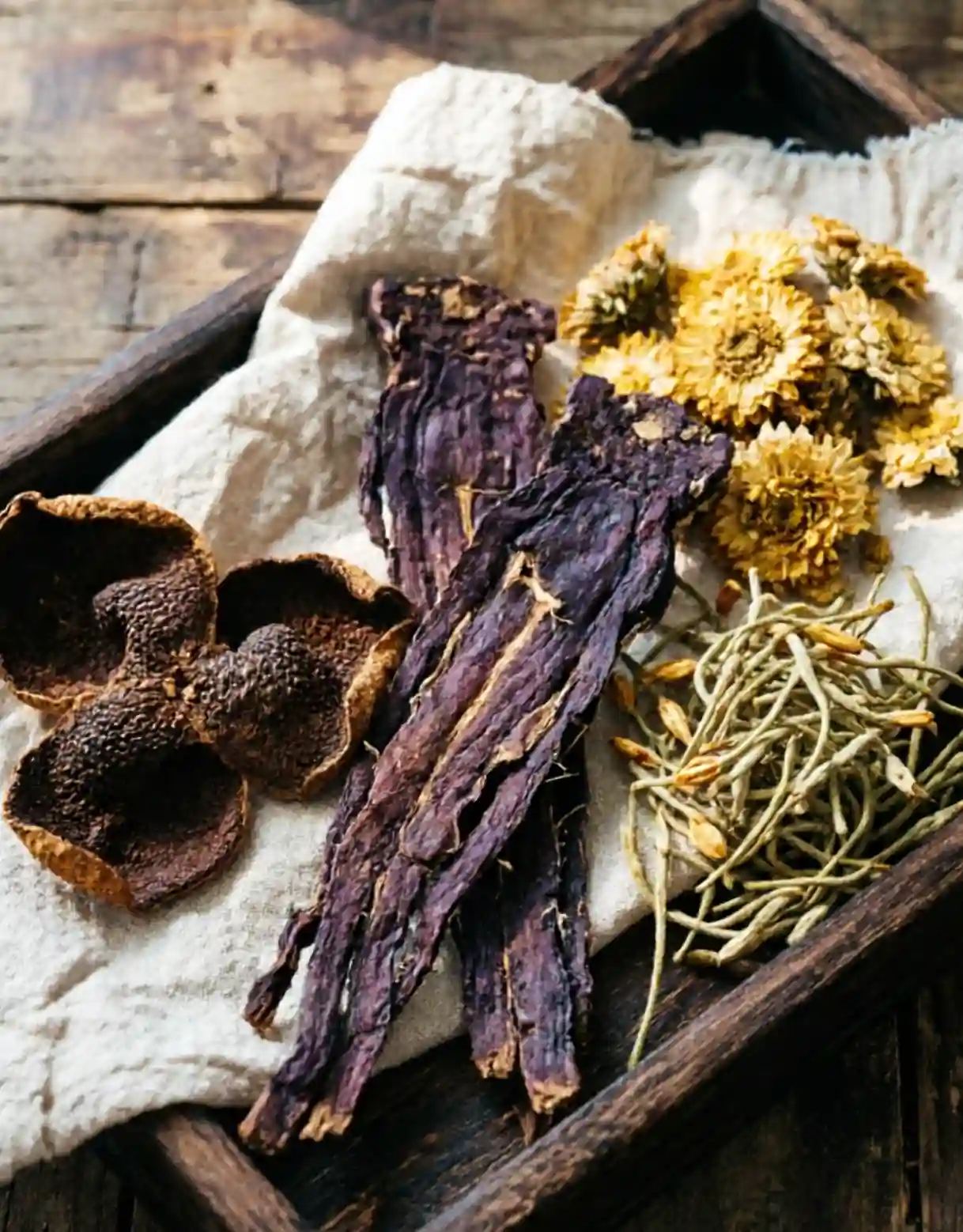
This product is kidney-shaped, slightly flattened, 3-5 mm long, 2-4 mm wide, and approximately 1.5 mm thick. The surface is black, blackish-brown, or grayish-brown with fine reticulate wrinkles. The apex is rounded and obtuse with a small protrusion, and the concave side has a fruit stalk scar. The texture is hard. The pericarp is thin and not easily separated from the seed; there is 1 seed with 2 cotyledons, yellow-white in color and oily. Odor: aromatic; Taste: pungent, slightly bitter.
Chemical Constituents
This product contains components such as psoralen, xanthotoxin, isobavachin, bavachin, isobavachalcone, corylifolinin (bavaschin), stigmasterol, isopsoralen (angelicin), bakuchiol, linoleic acid, and others.
Pharmacology
Improves cardiovascular system function; anti-tumor; photosensitizing; anti-early pregnancy and estrogen-like effects; stimulates the uterus; on bronchial smooth muscle, depending on the component, it can cause contraction or relaxation; excites intestinal tract in situ and in vitro; anti-pathogenic; liver protection. Toxicity: can cause renal pathological changes.
Properties and Channel Entry
Acrid, bitter, warm. Enters the Kidney and Spleen channels.
Functions and Indications
Warms the Kidneys and assists Yang, absorbs Qi and calms wheezing, warms the Spleen and stops diarrhea; for external use, dispels Wind and removes macules. Used for Kidney Yang insufficiency, impotence and nocturnal emission, enuresis and frequent urination, cold pain in the lower back and knees, Kidney-deficiency-induced wheezing, dawn diarrhea; for external use, treats vitiligo and alopecia areata.
Dosage and Administration
Internal: decoct 6-15 g for oral administration; or made into pills or powder. External: apply an appropriate amount to the affected area after soaking in wine.
Precautions and Contraindications
Contraindicated in cases of Yin deficiency with internal Heat.
Prescriptions
1. For lumbago during pregnancy with unbearable pain: Buguzhi (Fructus Psoraleae), any amount, stir-fry on a tile until fragrant and cooked, then grind into powder. Chew half a walnut kernel, take on an empty stomach, and administer 6 g with warm wine. (From "Fu Ren Liang Fang," Tong Qi San) 2. For general lumbago due to contusions and blood stasis: Buguzhi (stir-fried until fragrant, ground), Huixiang (Fructus Foeniculi, stir-fried), and Rougui (Cortex Cinnamomi) in equal parts. Grind into fine powder. Take 6 g per dose with hot wine, taken before meals. (From "Zhi Zhi Fang," Huixiang Jiu) 3. For uterine bleeding in women: Buguzhi (stir-fried yellow), Puhuang (Pollen Typhae, stir-fried), Qiannian Shihui (aged lime), and Dahuang (Radix et Rhizoma Rhei), each in equal parts. Grind into fine powder. Take 9 g per dose on an empty stomach with hot wine. Bleeding stops immediately. (From "Chong Ding Rui Zhu Tang Jing Yan Fang," Puhuang San) 4. For red and white vaginal discharge: Buguzhi and Shichangpu (Rhizoma Acori Tatarinowii) in equal parts (both cut into pieces and stir-fried). Grind into fine powder. Take 6 g per dose, mixed with wine infused with Shichangpu, and take warm. (From "Fu Ren Liang Fang," Poguzhi San) 5. For prolonged toothache due to kidney deficiency: Buguzhi 60 g and Qingshi 15 g. Stir-fry together, grind, and apply to the teeth. (From "Yu Yao Yuan Fang")