Pinyin: Chenpi
Aliases
Jupi, Hongpi, Juzipi, Guangjupi
Source
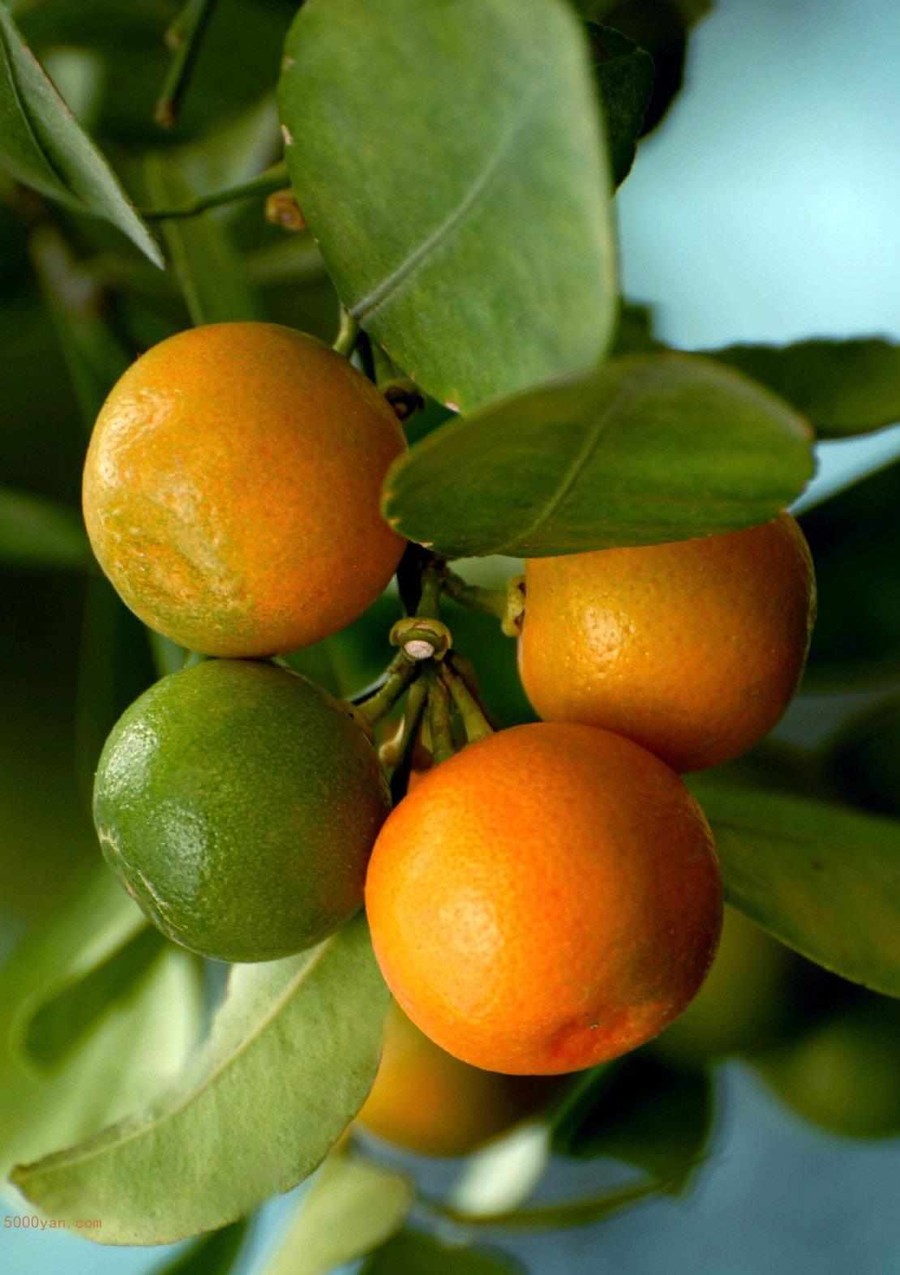
Rutaceae family plant tangerine (Citrus reticulata).Citrus reticulataDried mature pericarp of Blanco and its cultivated varieties. The medicinal material is classified as "Chenpi" and "Guangchenpi."
Botanical Description
An evergreen small tree or shrub, 3-4 m tall. Branches slender, usually thorny. Leaves alternate; petiole 0.5-1.5 cm long, narrowly winged, with a joint at the apex; leaf blade lanceolate or elliptic, 4-11 cm long, 1.5-4 cm wide, apex acuminate and slightly emarginate, base cuneate, margin entire or undulate, with indistinct blunt serrations and translucent oil glands. Flowers solitary or in clusters at branch tips or leaf axils; calyx cup-shaped, 5-lobed; petals 5, white or tinged with pink, reflexed when open; stamens 15-30, of varying lengths, filaments often united in groups of 3-5; pistil 1, ovary rounded, stigma capitate. Hesperidium nearly round or oblate, 4-7 cm in transverse diameter, pericarp thin and broad, easily peeled; segments 7-12, juice sacs soft and juicy. Seeds ovoid, white, pointed at one end, numbering from a few to dozens or absent. Flowering March-April, fruiting October-December.
Habitat and Distribution
Cultivated in hilly areas, low mountain regions, along river and lake banks, or on plains. It is cultivated in Jiangsu, Anhui, Zhejiang, Jiangxi, Taiwan, Hunan, Hubei, Guangdong, Guangxi, Hainan, Sichuan, Guizhou, Yunnan, and other locations.
Harvesting and Processing
Harvest the ripe fruit, peel off the pericarp, and dry in the sun or at low temperature.
Medicinal Properties
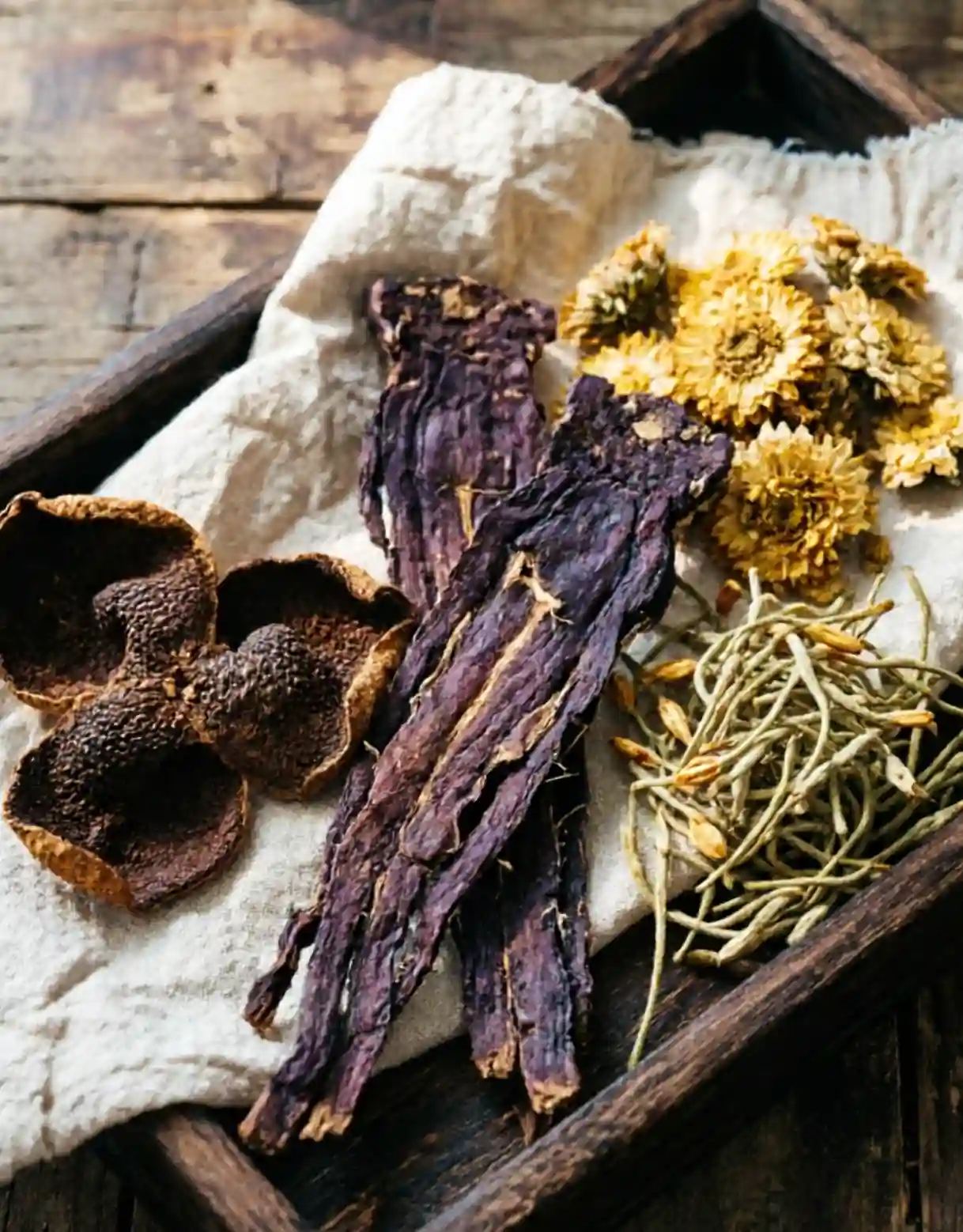
1. Chenpi: often broken into several pieces with bases connected, some in irregular slices, 1-4 mm thick. Outer surface orange-red or reddish-brown with fine wrinkles and sunken punctate oil cavities; inner surface pale yellowish-white, rough, with yellowish-white or yellowish-brown vascular bundles like silk fibers. Texture slightly hard and brittle. Fragrant aroma; taste pungent and bitter.
2
Chemical Constituents
This product contains hesperidin, n-decanal, citral, limonene, octanol, and other components.
Pharmacology
Regulates the digestive system; stimulates the heart, enhancing myocardial contractility, though excessive dosage may inhibit heart rate and increase coronary blood flow; provides a certain preventive effect against atherosclerosis induced by a high-fat diet; relieves asthma and expels phlegm; constricts renal blood vessels, reducing urine output; inhibits the isolated uterus, with high concentrations relaxing the uterus; enhances immune function; exhibits anti-inflammatory effects; shortens bleeding and clotting time.
Properties and Channel Entry
Bitter, pungent, and warm. Enters the Lung and Spleen channels.
Functions and Indications
Regulates Qi and strengthens the Spleen, dries Dampness and transforms Phlegm
Dosage and Administration
Internal use: decoction, 3-10 g; or made into pills or powder.
Precautions and Contraindications
Caution for patients with Qi deficiency pattern, Yin deficiency dry cough, hematemesis syndrome, red tongue with scant fluid, and internal excess Heat.
Prescriptions
1. For common cold with cough: Chenpi (tangerine peel) 20 g, Rongshuye (Ficus microcarpa leaf) 30 g, Pipaye (loquat leaf, with hairs removed) 20 g. One dose daily, decoct in water and take in two divided doses. (Zhuangzu Minjian Yongyao Xuanbian) 2. For lung accumulation presenting as a cup-shaped mass below the right costal region, developing into an abscess: Chenpi, Kujiegeng (Platycodon root), Tian Tingli (sweet Lepidium seed, stir-fried). Grind equal amounts into powder, form pills with cooked jujube paste, each pill the size of a Chinese parasol seed. Take 50 pills with rice water. (Gu Jin Yi Tong, Zao Gao Wan) 3. For chest impediment with chest tightness and shortness of breath: Chenpi 500 g, Zhishi (immature bitter orange) 90 g, Shengjiang (fresh ginger) 250 g. Decoct the three ingredients in 5 sheng of water to obtain 2 sheng. Take warm in two divided doses. (Jin Gui Yao Lue, Jupi Zhishi Shengjiang Tang) 4. For sudden loss of voice with inability to speak: Chenpi 150 g. Decoct in 3 sheng of water to obtain 1 sheng, strain, and take in a single dose. (Zhou Hou Fang)