Pinyin: Wumei
Aliases
Meishi, Heimei, Xunmei, Jumeirou.
Source
Rosaceae family plant Mei.Prunus mumeDried nearly ripe fruit of (Sieb.) Sieb. et Zucc.
Botanical Description
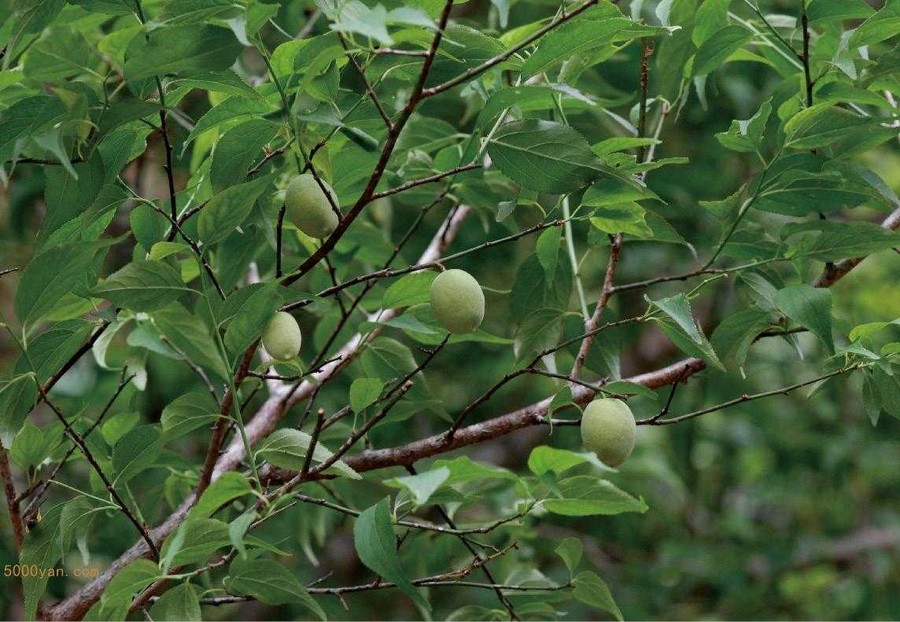
Deciduous tree, up to 10 m tall. Bark gray-brown, branchlets slender, apex spine-like. Leaves simple, alternate; petiole 1.5 cm long, pubescent; stipules deciduous; leaf blade elliptic-broadly ovate, flowers appearing before leaves in spring, fragrant, 1-3 clustered in axils of biennial lateral branches. Pedicel short; calyx usually reddish-brown, but in some varieties green or green-purple; petals 5, white or pale red, about 1.5 cm in diameter, broadly obovate; stamens numerous. Fruit subglobose, 2-3 cm in diameter, yellow or greenish-white, pubescent; drupe ellipsoid, apex with a small mucro, ventral and dorsal ridges grooved, surface honeycombed with pits. Flowering in winter to spring, fruiting from May to June.
Habitat and Distribution
It has been cultivated in many regions across China, with the highest concentration found south of the Yangtze River basin.
Harvesting and Processing
Harvest in summer when the fruit is nearly ripe, dry at low temperature, then seal until the color turns black.
Medicinal Properties
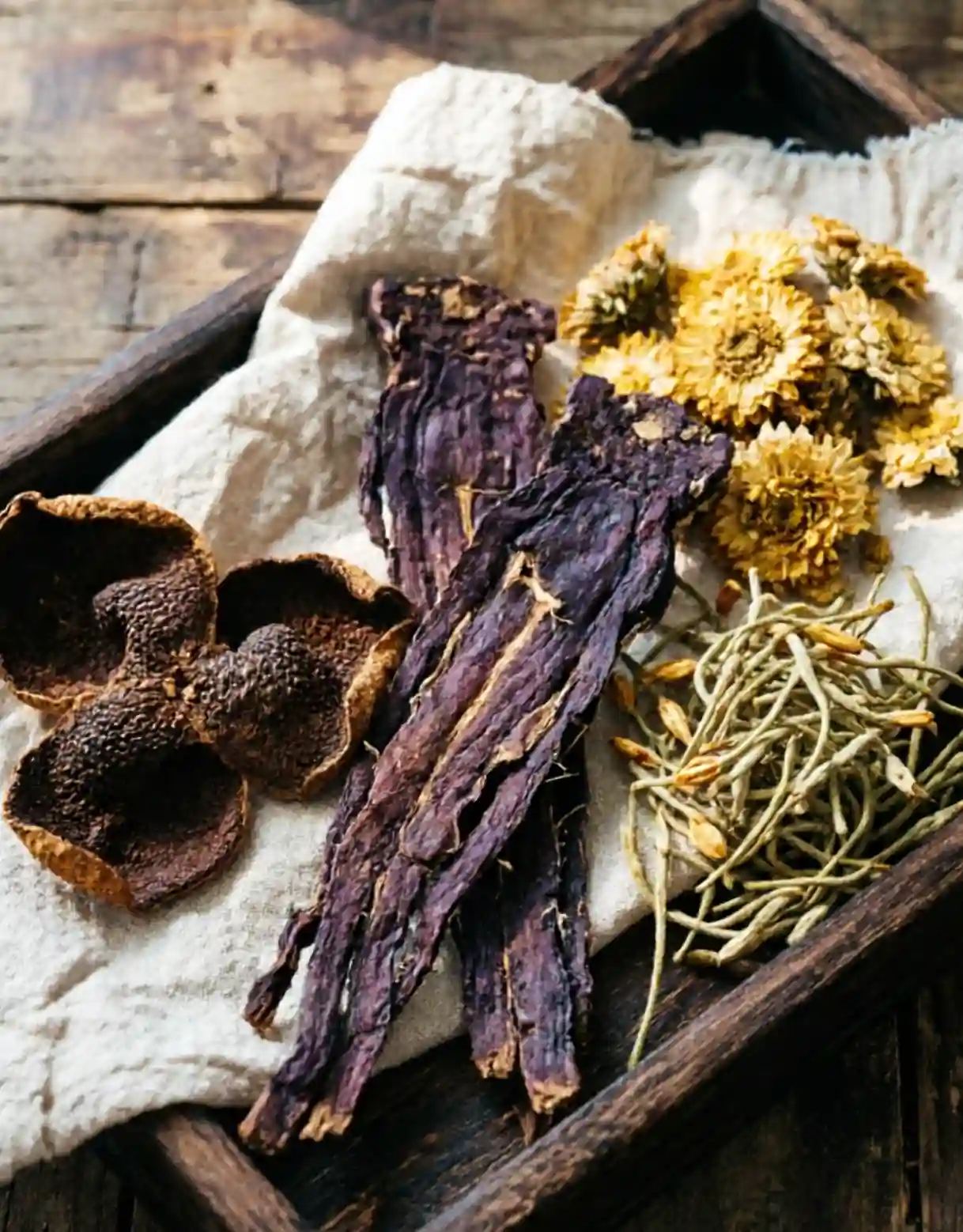
This product is subglobose or oblate-spheroidal, 1.5-3 cm in diameter, with a blackish or brownish-black surface, wrinkled and uneven, and a circular fruit stalk scar at the base. The stone is hard, ellipsoidal, brownish-yellow, with pits on the surface; the seed is flat-ovate, pale yellow. Odor: faint; Taste: extremely sour.
Chemical Constituents
This product contains citric acid, malic acid, 5-hydroxymethyl-2-furaldehyde, fumaric acid, linoleic acid, and other components.
Pharmacology
Kills intestinal parasites; resists pathogenic microorganisms; antagonizes calcium ions; enhances immune function.
Properties and Channel Entry
Sour, astringent, and neutral in nature; enters the Liver, Spleen, Lung, and Large Intestine channels.
Functions and Indications
Astringes the Lungs, binds the Intestines, generates body fluids, and calms roundworm
Dosage and Administration
Oral: decoct in water, 3-10 g; or made into pills or powder. External use: appropriate amount, calcined to preserve properties, ground into powder for sprinkling or mixed for application.
Precautions and Contraindications
Not suitable for excessive or prolonged consumption.
Prescriptions
1. For hemoptysis: Wumei (Smoked Plum) in an unspecified amount, decoct in water, mix with Baicaoshuang (Plant Soot), one dose will cure. (From Zhu's Collected Proven Prescriptions) 2. For sore throat: Wumei 30 g, Shuanghua (Honeysuckle Flower) 60 g, Xionghuang (Realgar) 12 g. Grind into powder, form into honey pills, each pill 3 g. Hold 1 pill in the mouth to dissolve, swallow slowly, 3 times daily. (From Selected Materials of the National New Chinese Medicine Therapies Exhibition) 3. For various sores and water toxin swelling pain: Wumei and Zaojiazi (Chinese Honeylocust Seed) in equal parts. Each ingredient is burned to preserve the nature, ground together, and applied to the sore to drain the toxin fluid. (From Prescriptions for Universal Relief) 4. For corns: Wumei flesh and Lizhirou (Lychee Flesh) in equal parts, pound into a paste and apply topically. (From Complete Collection of Sores and Ulcers)