Pinyin: Laifuzi
Aliases
Luobuzi, Lufuzi.
Source
1. For pneumonia: Renshen 6 g, decoct in water and take orally. 2. Internal use: decoct 3-10 g, large dose 10-30 g.Raphanus sativusL. of dried ripe seeds.
Botanical Description
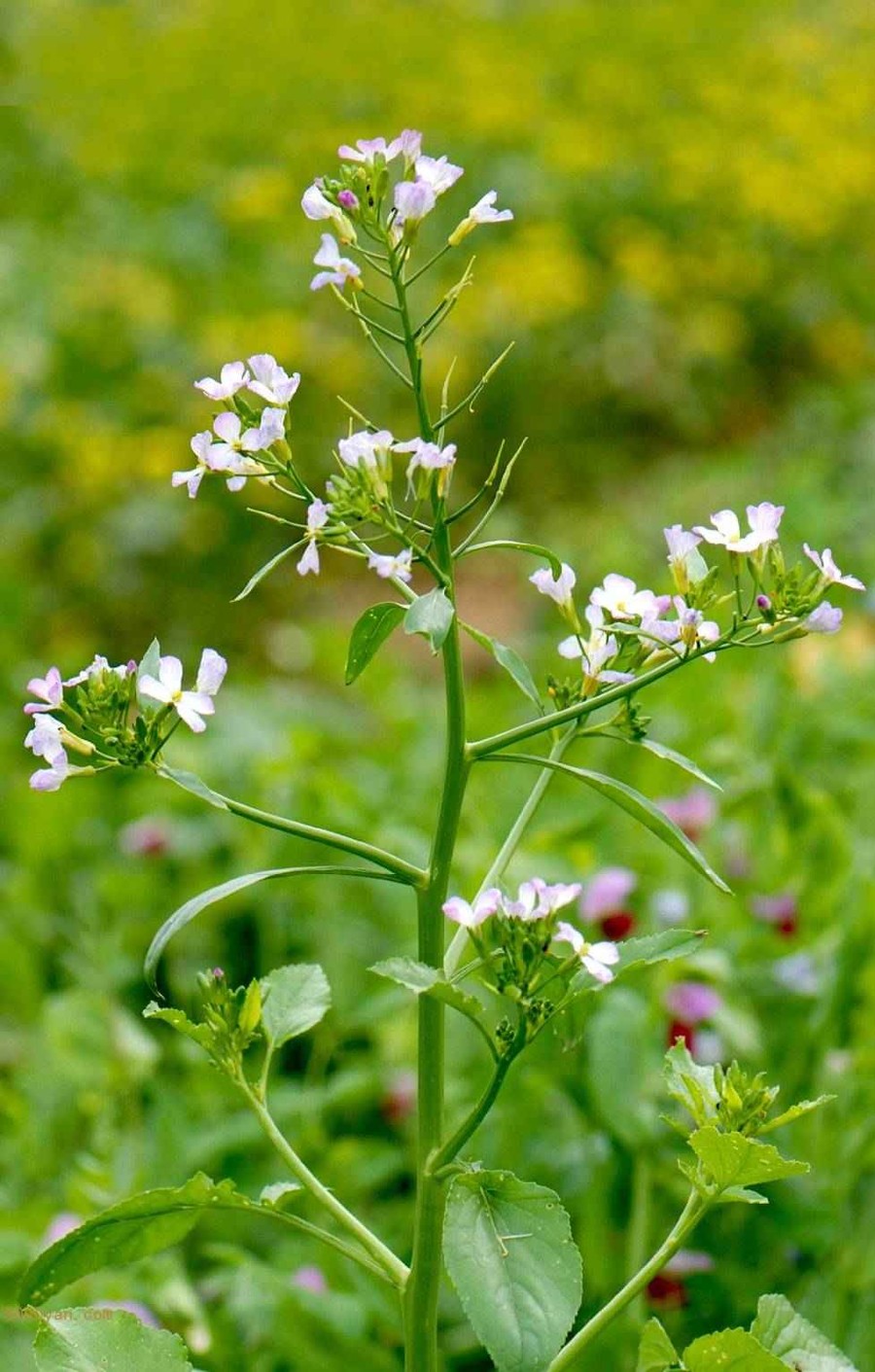
A biennial or annual herb, 30-100 cm tall. Taproot fleshy, oblong, spherical, or conical, with green, white, or red outer skin. Stems branched, glabrous (hairless), slightly glaucous; basal and lower cauline leaves lyrate-pinnatifid, 8-30 cm long, 3-5 cm wide, with an ovate terminal lobe and 4-6 pairs of oblong lateral lobes bearing blunt teeth and sparse coarse hairs; upper leaves oblong, serrate to nearly entire. Racemes terminal or axillary; sepals oblong; petals 4, white, purple, or pink, 1.5-2 cm in diameter, obovate, 1-1.5 mm long, with purple veins and a 5 mm claw; stamens 6 (4 long, 2 short); pistil 1, ovary awl-shaped, stigma capitate. Siliques terete, 3-6 cm long, constricted between seeds forming a spongy septum, with a beak 1-1.5 mm long; seeds 1-6, ovoid, slightly flattened, approximately 3 mm long, reddish-brown with fine reticulate venation. Flowering period: April to May; fruiting period: May to June.
Habitat and Distribution
Originally produced in China, it is cultivated throughout the country in various regions.
Harvesting and Processing
Harvest the plants in summer when the fruits are ripe, cut them, dry them in the sun, rub out the seeds, remove impurities, and dry again in the sun.
Medicinal Properties
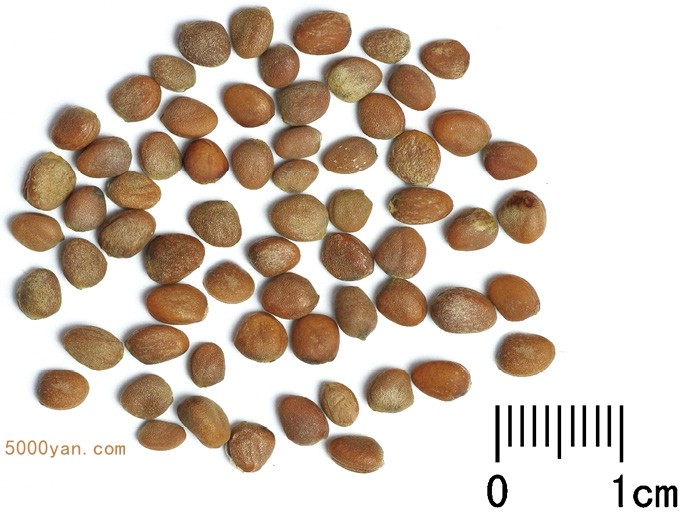
This product is suborbicular or elliptical in shape, slightly flattened, 2-4 mm long, 2-3 mm wide. The seed coat is thin, with a surface appearing red-brown, yellow-brown, or dark gray-brown; under a magnifying glass, fine reticulate patterns are observed, with several longitudinal grooves on one side of the seed and a black hilum at one end. There are 2 cotyledons, milky yellow and thick. Odor: faint; Taste: slightly bitter and pungent.
Chemical Constituents
This product contains campesterol, 22-dehydrocampesterol, sulforaphene, and sinapine.
Pharmacology
Antibacterial; lowers blood pressure; promotes rhythmic contraction of the ileum and inhibits gastric emptying; antitussive; expectorant.
Properties and Channel Entry
Acrid, sweet, and neutral. Enters the Lung, Spleen, and Stomach channels.
Functions and Indications
Eliminates food stagnation and relieves abdominal distension, descends Qi and transforms Phlegm
Dosage and Administration
Oral: decoct in water, 5-10 g; or in pill or powder form, preferably stir-fried. External: apply appropriate amount, ground into powder and mix for topical application.
Precautions and Contraindications
No food accumulation, phlegm stagnation, or patients with middle Qi deficiency should use with caution.
Prescriptions
1. For all types of food accumulation: Laifuzi 180 g, Shenqu 60 g, Banxia 90 g, Fuling 90 g, Chenpi 30 g, Lianqiao 30 g. Grind the above ingredients into powder, form pills with steamed bread dough the size of wutong seeds. Take 70-80 pills after meals with plain boiled water. (Baohe Wan from Danxi's Heart Method) 2. For habitual constipation: Laifuzi 20 g, Danggui 20 g, add 6 times the amount of water, decoct for 2 hours, boil twice, collect the filtered juice, add 200 g honey, bring to a boil. Take 200 ml daily. [Hunan Journal of Traditional Chinese Medicine, 1987, (1): 11] 3. For phlegm cough: Xingren (peeled and tip-removed) 15 g, Laifuzi 15 g. Grind into powder. Take as porridge pills. (Danxi's Heart Method) 4. For pediatric abdominal distension: Laifuzi (stir-fried) equal parts, Zisugeng equal parts, Gange equal parts, Chenpi equal parts, add a small amount of Gancao, decoct and take. For poor appetite, add Baizhu. (Wanshi's Family Prescriptions) 5. For dysentery with accumulation and tenesmus: Laifuzi 15 g, Baishao 9 g, Dahuang 3 g, Muxiang 1.5 g. Decoct in water and take orally. (Fangmai Zhengzong)