Pinyin: Xiebai
Aliases
Xiegen, Yesuan, Xiaodusuan, Xie Baitou.
Source
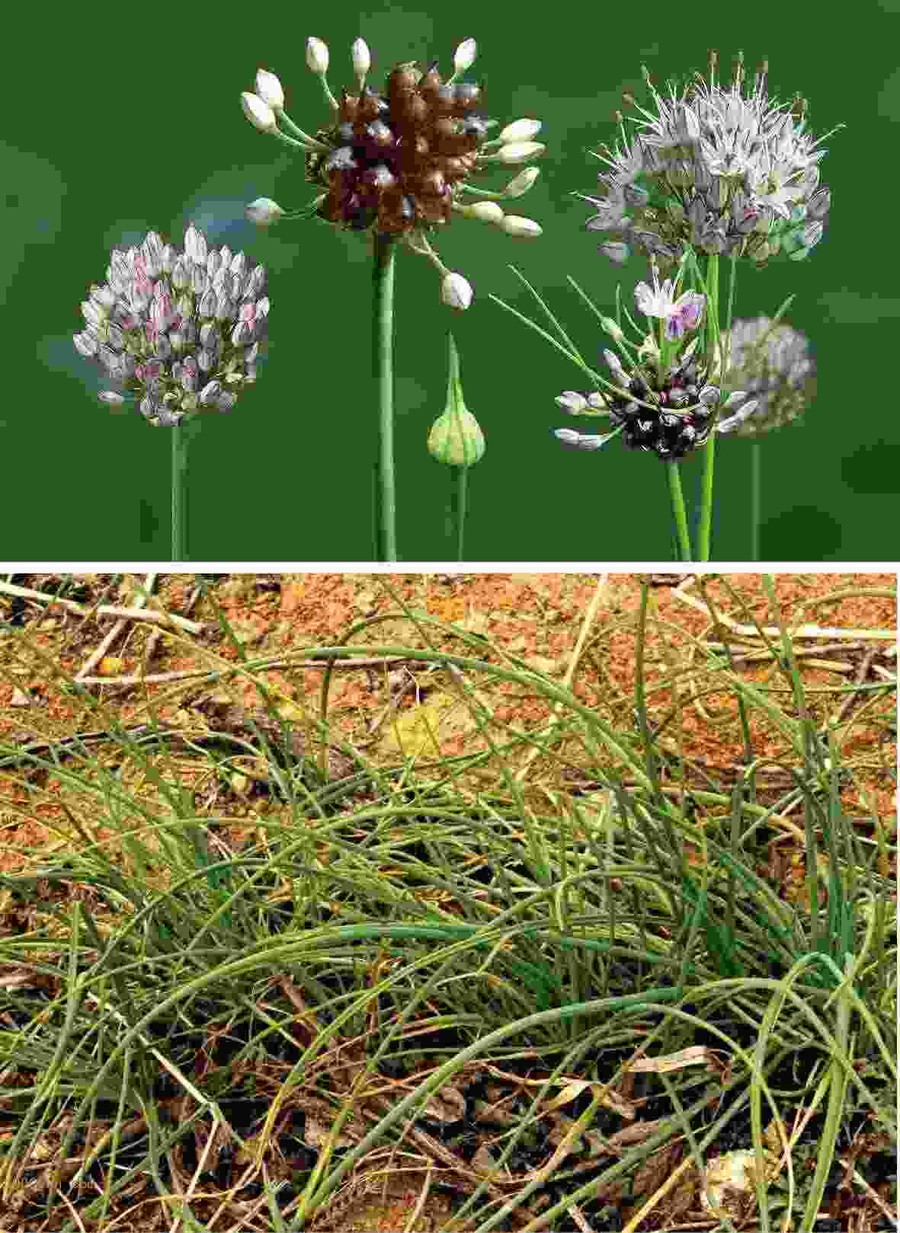
Liliaceae plant *Allium macrostemon*.Allium macrostemonDried bulb of Bunge.
Botanical Description
Perennial herb, 30-60 cm tall. Bulb subglobose, 0.7-1.5 cm in diameter, often with 1-3 small bulblets attached laterally, outer scales white and membranous, turning black with age. Leaves alternate, grayish-green, semiterete, narrowly linear, hollow, 20-40 cm long, 2-4 mm wide, apex acuminate, base sheathing and clasping the stem. Scape solitary, erect, 30-70 cm tall; umbel terminal, globose, with membranous bracts below, ovate, apex long-acuminate; pedicels 1-2 cm long; some umbels have only a few flowers but numerous fleshy bulbils, or even entirely transformed into bulbils; perianth segments 6, pink or rose-red; stamens 6, longer than perianth, filaments slender, slightly expanded at base; ovary superior, globose. Capsule obovoid, apex emarginate. Flowering May-June, fruiting August-September.
Habitat and Distribution
It grows on slopes, hills, valleys, or grasslands below 1500 m elevation. Distributed throughout China except Xinjiang and Qinghai.
Harvesting and Processing
Excavated in summer and autumn, washed clean, rootlets removed, steamed thoroughly or blanched in boiling water until thoroughly cooked, then dried in the sun.
Medicinal Properties
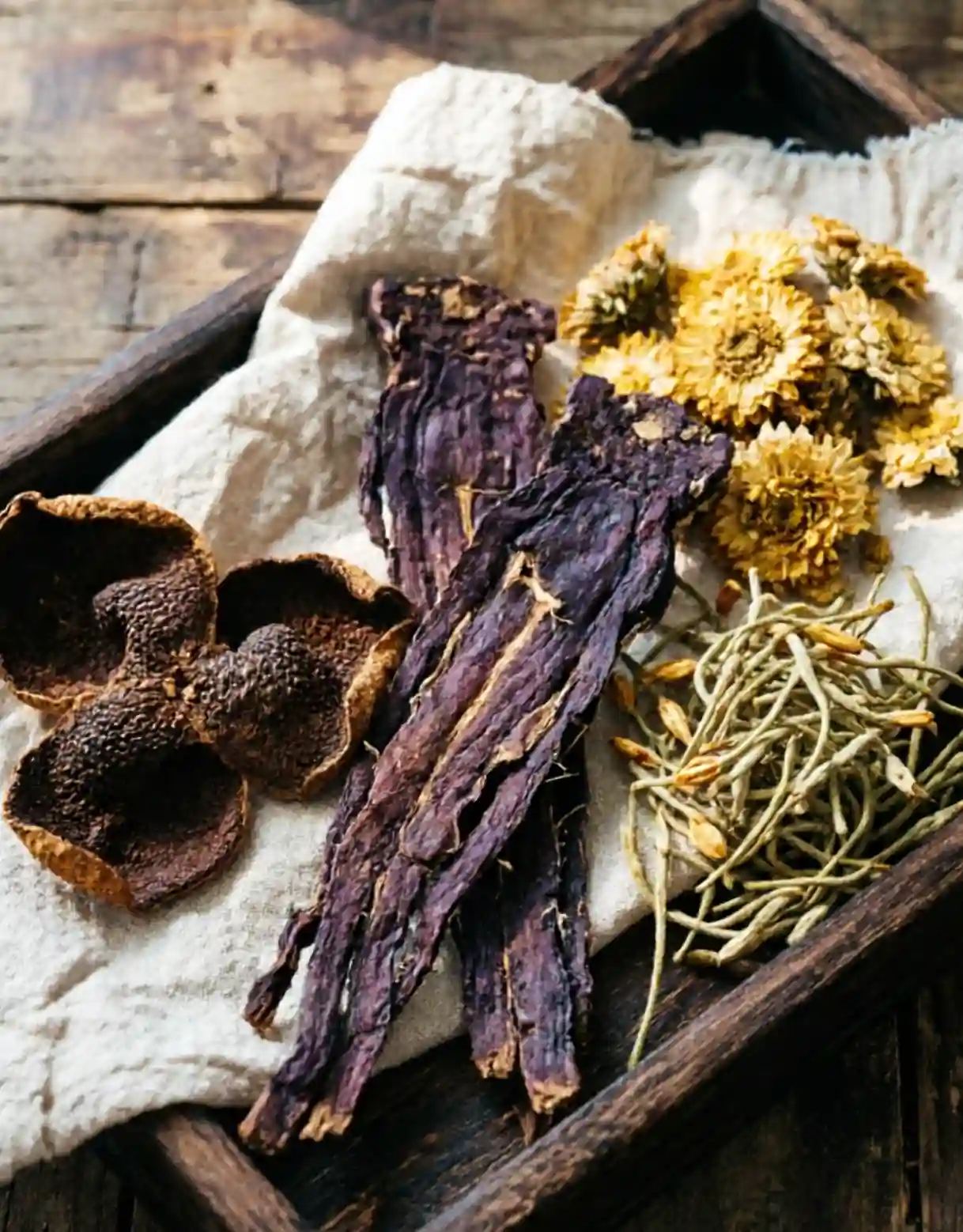
This product is irregularly ovoid in shape, 0.5-1.5 cm high and 0.5-1.8 cm in diameter. The surface is yellowish-white or pale yellowish-brown, wrinkled, semi-transparent, covered with off-white membranous scales, and has a protruding bulbous disc at the base. The texture is hard and horn-like. It has a garlic-like odor and a slightly pungent taste.
Chemical Constituents
This product mainly contains xiebai glycoside A, xiebai glycoside D, xiebai glycoside E, xiebai glycoside F, methylallyl disulfide, dimethyl disulfide, 2,4-dimethylthiophene, 5-methyl-1,2,3,4-tetrathiane and other components.
Pharmacology
Anti-atherosclerotic; anti-platelet aggregation; interferes with arachidonic acid metabolism; antioxidant; antibacterial effects, etc.
Properties and Channel Entry
Acrid, bitter, warm. Enters the Heart, Lung, Stomach, and Large Intestine channels.
Functions and Indications
Unblocks Yang, dissipates masses, promotes Qi circulation, and removes stagnation. Used for chest Bi, epigastric and abdominal distension, fullness, and tenesmus with dysenteric diarrhea.
Dosage and Administration
Oral: decoction, 5-10 g, fresh product 30-60 g; or made into pills or powder, also can be cooked into porridge. External use: appropriate amount, pound and apply; or pound to extract juice and apply.
Precautions and Contraindications
Patients with Yin deficiency and fever should use with caution.
Prescriptions
1. For chest impediment with inability to lie down and heart pain radiating to the back: Gualou fruit (crushed) 1 piece, Xiebai 90 g, Banxia half a sheng, white wine one dou. Boil the four ingredients together to obtain four sheng. Take one sheng warm, three times daily. (from *Jinkui Yaolüe*, Gualou Xiebai Banxia Decoction) 2. For lung qi panting and rapid breathing: Grind Xiebai into juice and drink. (from *Weisheng Yijian Fang*) 3. For sore swollen throat: Use Xiebai root, pound with vinegar, apply to the swollen area, and replace when cold. (from *Shenghui Fang*) 4. For sprain with swelling and pain: Pound fresh Xiebai with red fermented rice dregs and apply to the affected area. (from *Fujian Yaowu Zhi*) 5. For headache and toothache: Fresh Xiebai and brown sugar, 15 g each. Pound into a paste and apply to the sole of the foot. (from *Fujian Yaowu Zhi*)