Pinyin: Hongqi
Aliases
Zhenpanzi, Yan Huangqi, Hei Qi.
Source
Fabaceae plant *Hedysarum polybotrys*Hedysarum polybotrysThe dried root of Hand.-Mazz.
Botanical Description
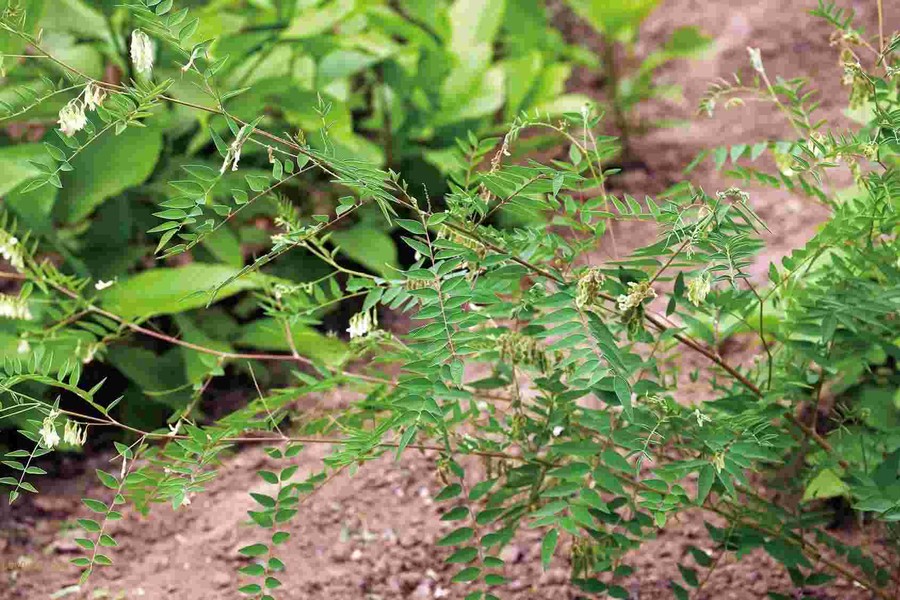
Perennial herb, up to 1.5 m tall. Main root thick and long, cylindrical, outer bark reddish-brown, 10-50 cm long. Leaves alternate; petiole long; stipules lanceolate, connate at base; odd-pinnate compound leaves, up to 15 cm long; leaflets 7-25, petiolule very short; leaf blade oblong-ovate, 1-3.5 cm long, 5-11 mm wide, apex nearly truncate or slightly emarginate, base broadly cuneate, entire margin, glabrous above, lower midvein pilose. Raceme axillary, 5-8 cm long, with 20-25 flowers, pedicel filiform, 2-3 mm long, pilose; calyx obliquely campanulate, pubescent, the lowest calyx tooth larger than the other four; papilionaceous corolla, pale yellow, about 1 cm long; stamens 10, diadelphous (9+1); ovary narrowly oblong, stipitate. Legume flat, moniliform, with 3-5 segments, margin with narrow wing, surface sparsely reticulate and pubescent, each segment containing one ellipsoid seed. Flowering June to August, fruiting July to September.
Habitat and Distribution
Grows in rocky crevices on mountain slopes or among shrubs at altitudes below 2600 m. Distributed in Inner Mongolia, Ningxia, Gansu, and western Sichuan.
Harvesting and Processing
Harvested in spring and autumn, remove the root crown and fibrous roots, then sun-dry.
Medicinal Properties
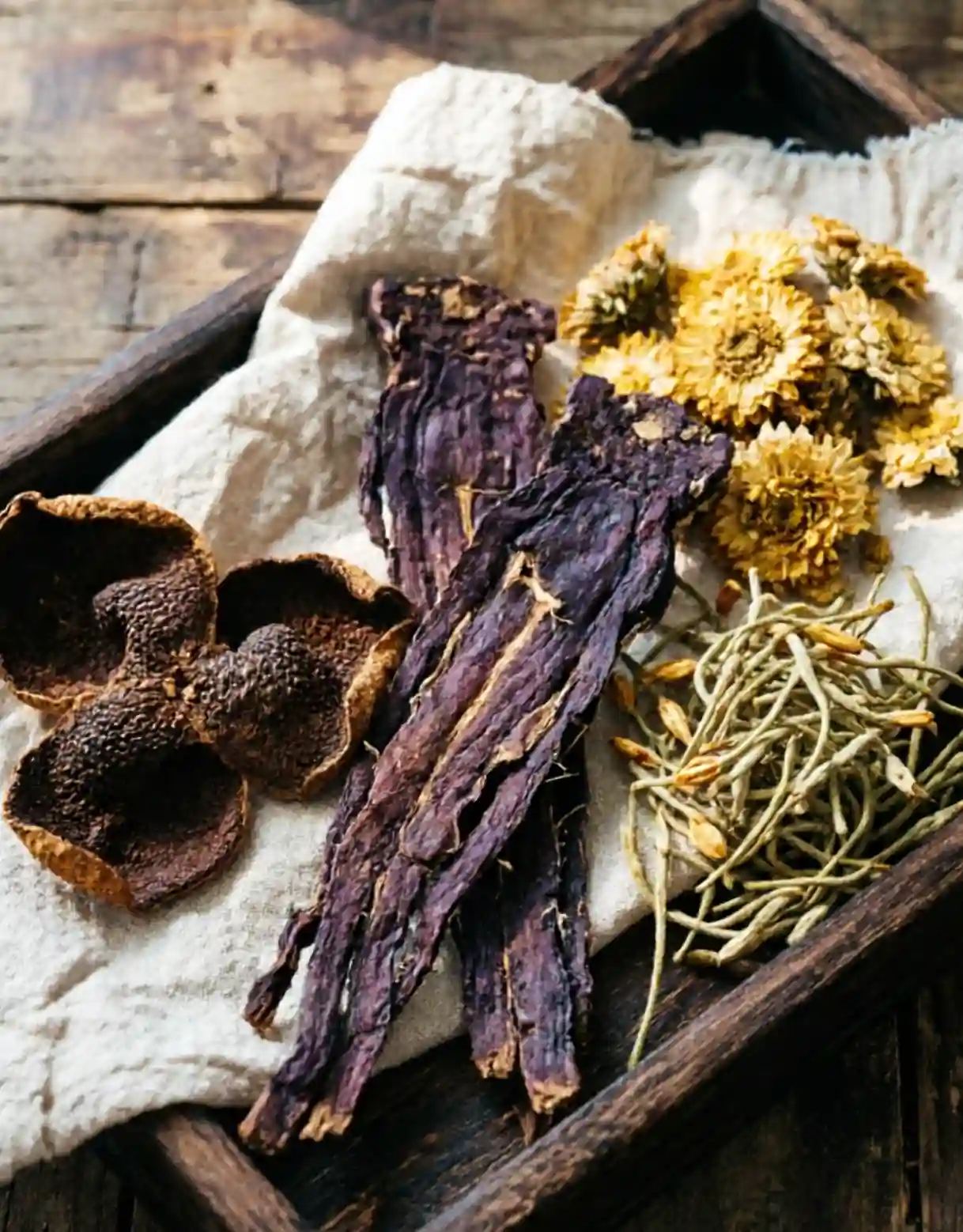
This product is cylindrical in shape, with few branches, slightly thicker at the upper end, 10-50 cm long, and 0.6-2 cm in diameter. The surface is grayish-reddish-brown, with longitudinal wrinkles, transverse elongated lenticel-like protrusions, and a few rootlet scars; the outer bark is easily detached, revealing a pale yellow color underneath. The texture is hard and tenacious, not easily broken; the fracture surface is fibrous and powdery, with a yellowish-white bark layer, a pale yellowish-brown wood layer, radial rays, and a pale brown cambium ring. Odor: faint; Taste: slightly sweet, with a beany flavor when chewed.
Chemical Constituents
This product mainly contains Hedysarum polysaccharides, formononetin, and ferulic acid alkyl esters, among other components.
Pharmacology
It has significant immune-enhancing and anti-aging effects; improves experimental respiratory distress syndrome; enhances hypoxia tolerance; and has sedative, analgesic, anti-inflammatory, and antimicrobial effects.
Properties and Channel Entry
Sweet, slightly warm. Enters the Spleen and Lung channels.
Functions and Indications
Tonifies Qi and raises Yang, secures the exterior and stops sweating, promotes urination to reduce edema. Generates body fluids and nourishes Blood, moves stagnation and unblocks Bi syndrome, expels toxins and drains pus, constricts sores and regenerates tissue. Used for Qi deficiency with fatigue, poor appetite and loose stools, sinking of Spleen Qi, chronic diarrhea and rectal prolapse, bloody stools and uterine bleeding, exterior deficiency with spontaneous sweating, Qi deficiency edema, internal Heat with wasting-thirst, Blood deficiency with sallow complexion, hemiplegia, Bi pain and numbness, non-healing sores and abscesses, and chronic ulcers that fail to heal.
Dosage and Administration
Internal administration: decoct in water, 9-30 g. For supplementing Qi and tonifying the Middle, use honey-fried.