Pinyin: Dasuan
Aliases
Húsuan, Dútóusuan, Dúsuàn.
Source
Liliaceae plant garlicAllium sativumL. scale bulb.
Botanical Description
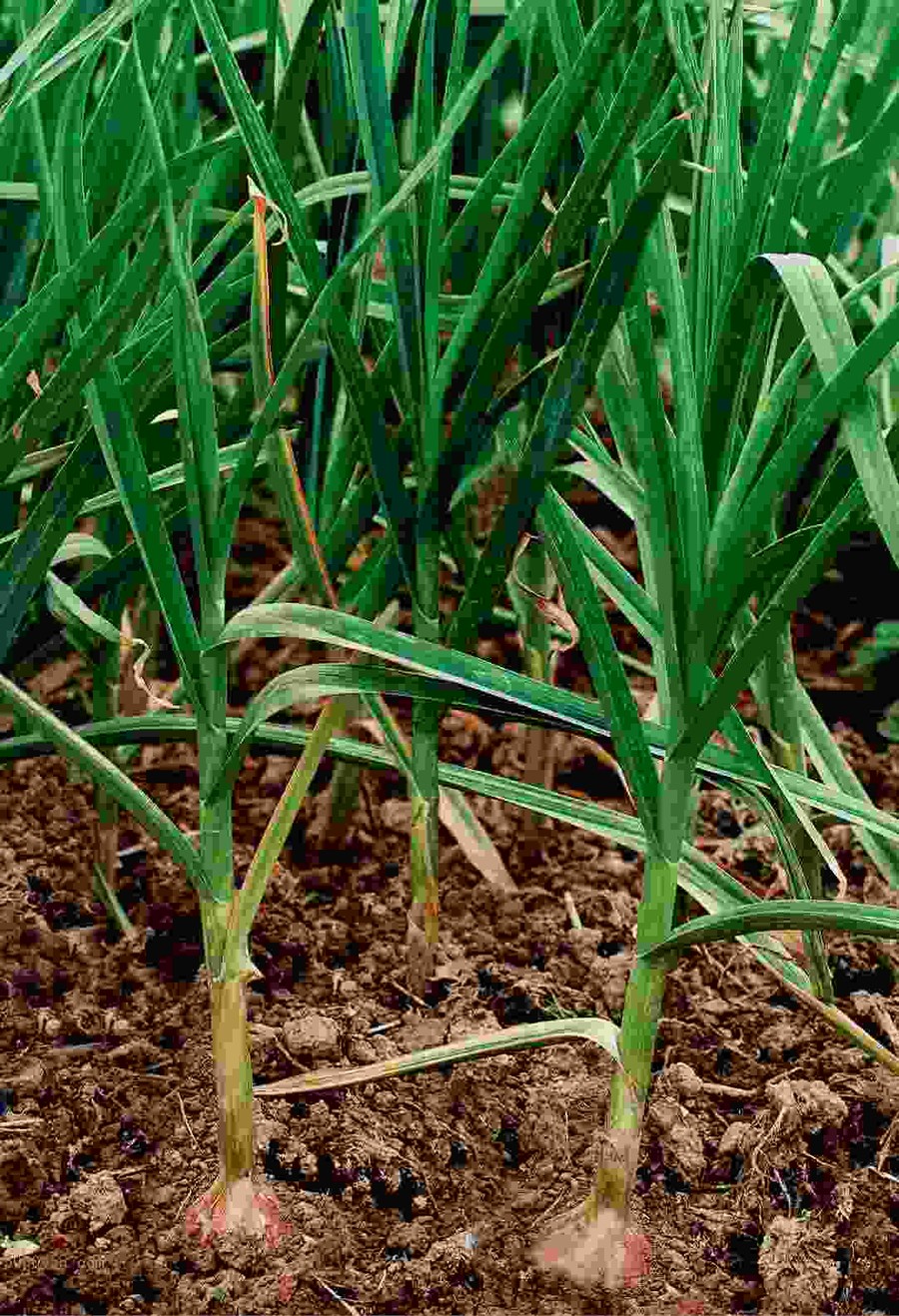
Biennial herb with a strong garlic-like odor. Bulb large, spherical to oblate-spherical, usually composed of numerous fleshy, lobed small bulbs tightly arranged, covered by several layers of white to purplish membranous outer skins. Leaves basal; leaf blades solid, broad-linear to linear-lanceolate, flat, apex long-acuminate, shorter than the scape, up to 2.5 cm wide, base sheathing. Scape solid, cylindrical, up to 60 cm tall, lower half covered by leaf sheaths; spathe with a long beak; umbel densely bearing bulbils, interspersed with a few flowers; pedicels slender; bracts large, ovate, membranous, mucronate; flowers usually pale red; perianth segments lanceolate to ovate-lanceolate, inner ones shorter; stamens shorter than perianth, filaments basally connate and adnate to perianth segments, inner ones with enlarged bases, each side of the enlargement with 1 tooth, tooth apex extending into a long filamentous structure exceeding the perianth, outer ones conical; ovary globose; style not exserted beyond perianth. Flowering period: July.
Habitat and Distribution
Cultivated throughout various regions in China.
Harvesting and Processing
Harvested when the leaves wither in summer, remove fibrous roots and sediment, then air-dry in a ventilated area until the outer skin is dry.
Medicinal Properties
This product is subglobose in shape, 3-6 cm in diameter. The surface is covered with white, light purple, or purplish-red membranous scales. The apex is slightly pointed, with a remnant scape in the center, and multiple fibrous root scars at the base. After peeling off the outer skin, a single bulb or 6-16 lobed small bulbs can be seen, growing around the base of the remnant flower stem. The bulb lobes are slightly ovoid, with membranous outer skin, slightly pointed apex, and one side arched and raised. After removing the membranous skin, the interior is white and fleshy. The odor is characteristic, the taste is pungent and irritating. Those with large size, thick flesh, and pungent taste are considered superior.
Chemical Constituents
This product primarily contains allicin, allitridin, diallyl sulfide, and methyl allyl disulfide.
Pharmacology
Has antibacterial, antiviral, and antiprotozoal effects; has blood pressure-lowering, blood lipid-lowering, and anti-atherosclerotic effects; has platelet aggregation inhibition and thrombolytic effects; has anti-tumor, anti-mutation, and nitrosamine synthesis blocking effects; has hepatoprotective effects; enhances phagocytic cell phagocytosis and promotes serum hemolysis; has oxygen free radical scavenging and blood glucose-lowering effects.
Properties and Channel Entry
Acrid, warm. Enters the Spleen, Stomach, and Lung channels.
Functions and Indications
Detoxifies and reduces swelling, kills parasites, and stops dysentery. Used for carbuncle, swelling, sores, scabies, tinea, pulmonary tuberculosis, whooping cough, diarrhea, and dysentery.
Dosage and Administration
Internal: decoct 5-10 g in water; consume raw, cooked, or roasted, or mash into pills. For cooking or roasting, use a relatively large amount; for raw consumption, use a relatively small amount. External: apply an appropriate amount as a mashed poultice, as a suppository, apply the juice, or slice for moxibustion.
Precautions and Contraindications
For patients with Yin deficiency and fire hyperactivity, liver heat with eye disorders, various conditions of the mouth, teeth, throat, and tongue, as well as after epidemic diseases, the raw product is contraindicated for oral administration; the prepared product should be used with caution. Application to the navel, use as a suppository, or enema are all unsuitable for pregnant women. External use has a strong local irritant effect, which can cause burning sensation, pain, and blistering; therefore, prolonged application should be avoided.
Prescriptions
1. For infantile whooping cough: Dasuan (Garlic) 15 g, Hongtang (Brown sugar) 6 g, Shengjiang (Fresh ginger) a small amount. Decoct in water and take orally, several times daily. (*Guizhou Traditional Chinese Medicine Proven Prescriptions*) 2. For common cold: Suantou (Garlic bulb) and Chaye (Tea leaves) each 9 g. Steep in boiling water and take. (*Fujian Materia Medica*) 3. For psoriasis: Dutousuan (Single-clove garlic) 1 piece, Hongjiaoni (Red clay) 1 piece. Pound together into a paste and apply externally to the affected area. Apply once per day, every other day; 3 applications may show effect. [*Henan Traditional Chinese Medicine* 1982, (3): 21] 4. For postpartum stroke with opisthotonos and inability to speak: Dasuan (Garlic) 2 cloves, crushed, add 1.5 cups of water, decoct until reduced to 70%, strain the dregs, and administer orally. (*Shengji Zonglu*: Dasuan Decoction)