Pinyin: Luyao
Aliases
Jiu Ceng Lou, Pan Long Qi, Pian Tou Qi, Shan Mi Zi
Source
Liliaceae plant *Smilacina japonica*Smilacina japonicaA. Gray's dried root and rhizome.
Botanical Description
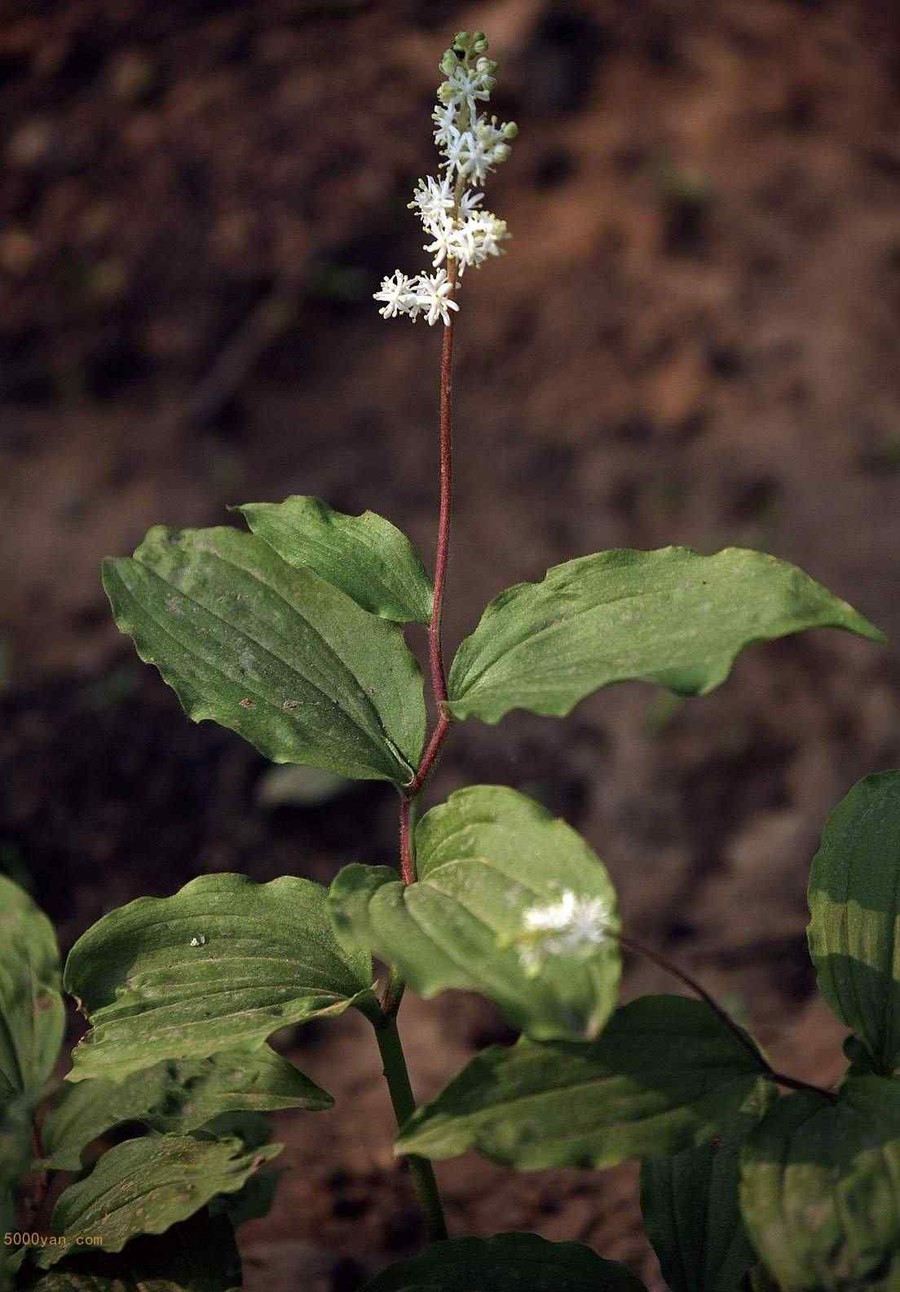
A perennial herb, 30-60 cm tall. Rhizome creeping, mostly cylindrical, 6-10 cm in diameter, sometimes with enlarged nodes. Stems have coarse hairs above the middle. Leaves alternate, 4-9 per stem; petioles 3-15 mm long; leaf blades papery, ovate-elliptic, elliptic, or oblong, 6-13 cm long, 3-7 cm wide, apex nearly shortly acuminate, base rounded, both surfaces sparsely covered with coarse hairs or nearly glabrous. Panicles 3-6 cm long, with short coarse hairs; flowers solitary. Pedicels 2-6 mm long; perianth segments 6, separate or only slightly fused at base, oblong or oblong-obovate, about 3 mm long, white; stamens 6, filaments base adnate to perianth segments, anthers small; ovary 3-loculed, style nearly as long as ovary, stigma almost undivided. Berry nearly spherical, 5-6 mm in diameter, red when ripe, containing 1-2 seeds. Flowering period May-June, fruiting period August-September.
Habitat and Distribution
Grows under forest shade or in rock crevices. Distributed in Northeast China, as well as Hebei, Shanxi, Shaanxi, Gansu, Jiangsu, Anhui, Zhejiang, Jiangxi, Taiwan, Henan, Hubei, Hunan, Sichuan, and Guizhou.
Harvesting and Processing
Harvested in spring and autumn, washed clean, used fresh or dried in the sun.
Medicinal Properties
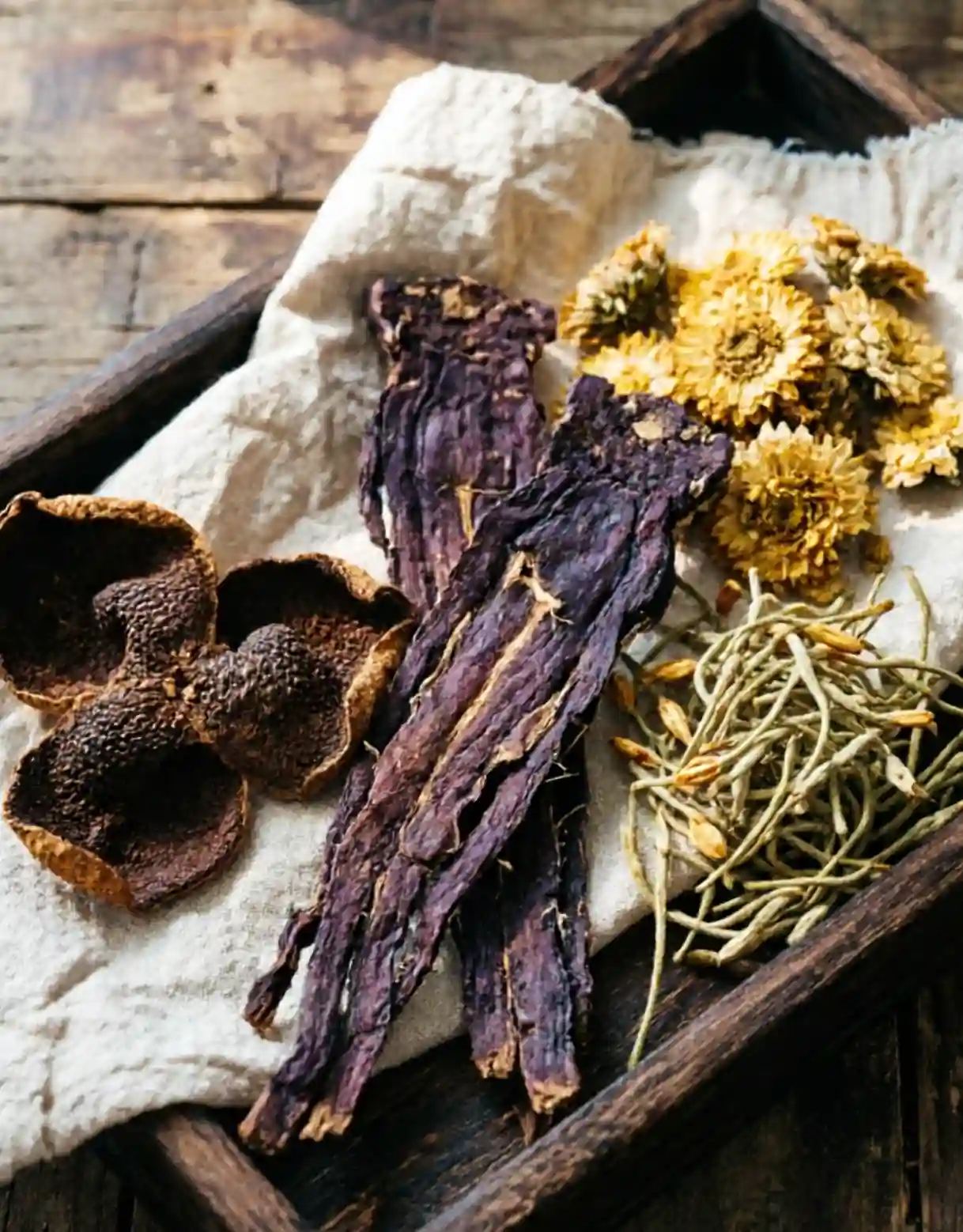
The dried rhizome is slightly nodular, somewhat flattened, 6-15 cm long, 0.5-1 cm in diameter. The surface is brown to brownish-brown, wrinkled, with one to several stem bases or bud bases at the apex, surrounded by numerous densely growing fibrous roots. The texture is relatively hard, the cut surface is white and powdery. The odor is faint, and the taste is sweet, slightly acrid. Specimens with thick rhizomes, white cut surfaces, and abundant powder are considered superior.
Chemical Constituents
This product contains isorhamnetin-3-O-galactoside and other compounds.
Properties and Channel Entry
Sweet, bitter, warm. Enters the Kidney and Liver channels.
Functions and Indications
Tonifies the Kidney and strengthens Yang, activates Blood and dispels stasis, expels Wind and alleviates pain. Indications: Kidney deficiency impotence, irregular menstruation, migraine and tension headache, Wind-Damp painful obstruction (Bi syndrome), carbuncle, swelling, sore and toxicity, traumatic injury from falls and blows.
Dosage and Administration
Internal: decoct in water, 6-15 g; or steep in wine. External: apply an appropriate amount, mash for topical application; or apply with heat.
Prescriptions
1. For impotence and overwork fatigue: 15-30 g of *Smilacina japonica*. Steep in wine and take orally. (Huashan Materia Medica) 2. For irregular menstruation: 12-15 g of *Smilacina japonica*. Decoct in water and take orally. (Shaanxi Chinese Herbal Medicine) 3. For headache and migraine: 6 g each of *Smilacina japonica*, Chinese Angelica, Chuanxiong, Cimicifuga, and Forsythia. Decoct in water and take after meals. (Huashan Materia Medica) 4. For acute mastitis: 30 g each of fresh *Smilacina japonica* and green vegetable leaves. Pound together into a paste, wrap in cloth, heat in boiling water, then apply hot to the breast. (Guizhou Folk Medicine) 5. For traumatic injury and unnamed swellings: Pound *Smilacina japonica* into a paste and apply to the affected area. (Selected Chinese Herbal Medicines from Shaanxi, Gansu, and Ningxia)