Pinyin: Jiegeng
Aliases
Baiyao, Liru, Gengcao, Kugeng.
Source
Plants of the Campanulaceae family *Platycodon grandiflorus*Platycodon grandiflorumDried root of (Jacq.) A.DC.
Botanical Description
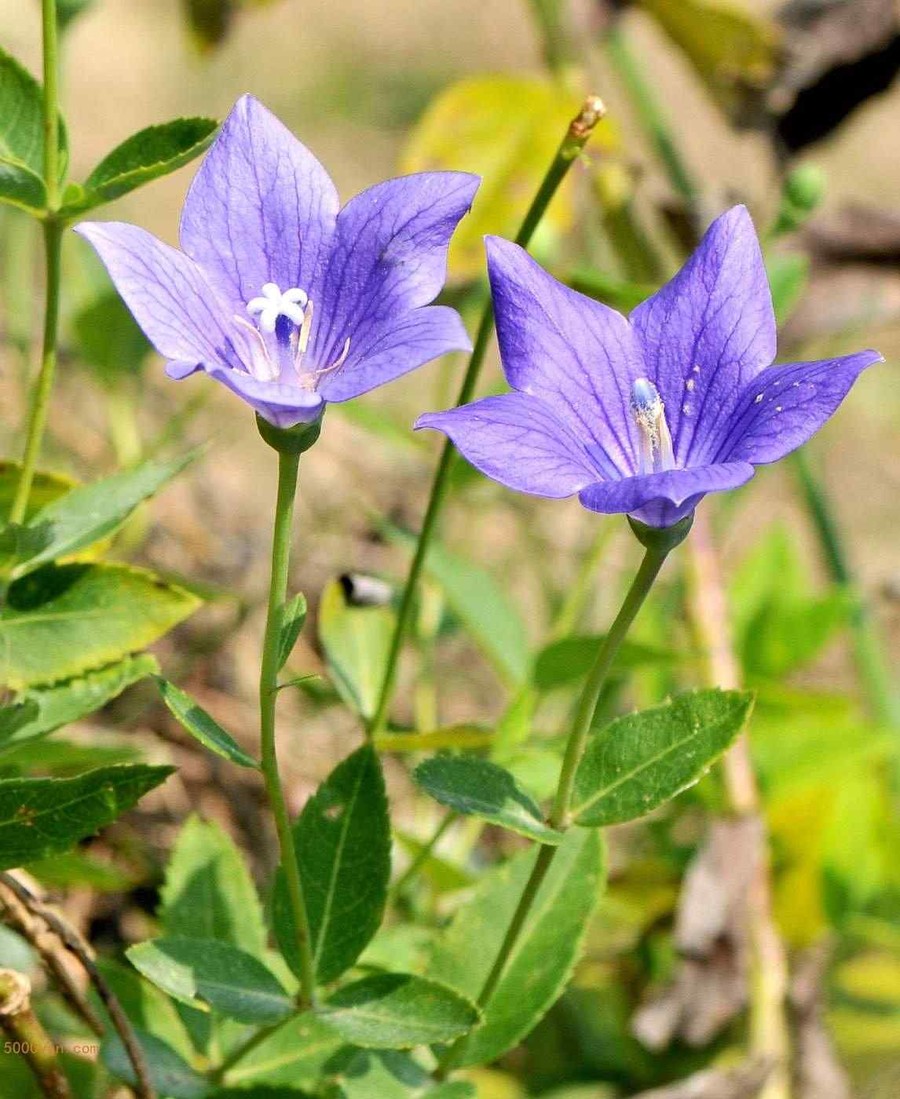
Perennial herb, 30-120 cm tall. The entire plant has white latex. The main root is long fusiform with few branches. The stem is glabrous (hairless), usually unbranched or slightly branched at the upper part. Leaves are 3-4 in a whorl, opposite, or alternate; sessile or with very short petioles; leaf blades ovate to lanceolate, apex acute, base cuneate, margin sharply serrate, lower surface covered with white powder. Flowers are solitary or several, terminal or forming a sparse raceme; calyx campanulate, 5-lobed; corolla broadly campanulate, blue or blue-purple, 5-lobed, triangular; stamens 5, filaments widened at base, densely pubescent; ovary inferior, style 5-lobed. Capsule obovoid, opening by 5 apical valves when mature. Seeds numerous, brown. Flowering period July to September, fruiting period August to October.
Habitat and Distribution
It grows on mountain grasslands, forest edges, or is cultivated. Distributed throughout various regions of the country.
Harvesting and Processing
Harvested in spring and autumn, washed clean, fibrous roots removed, fresh skin peeled off or left on, then dried.
Medicinal Properties
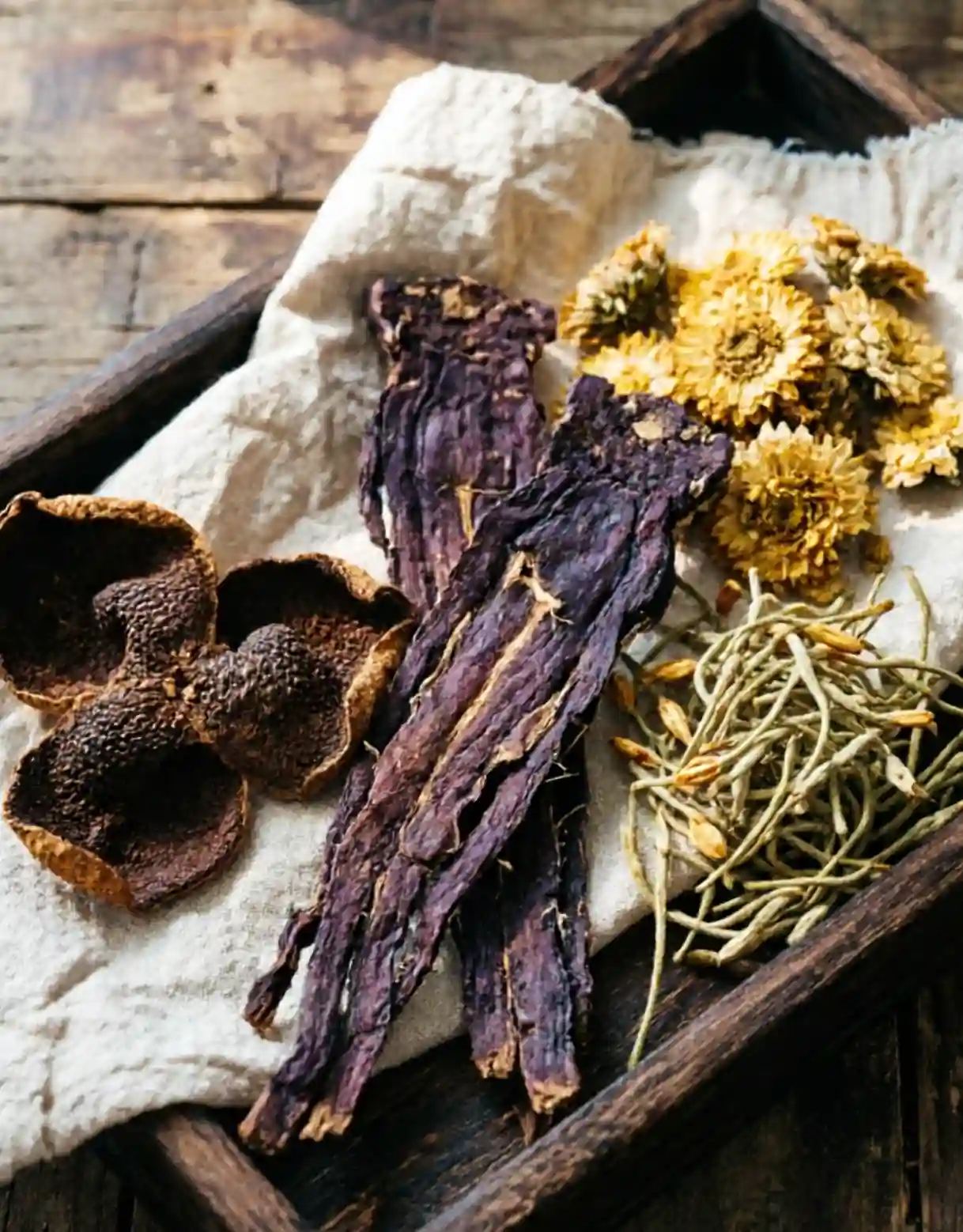
Root cylindrical or fusiform, tapering toward the lower end with branches, 6-20 cm long, diameter 1-2 cm. Surface pale yellow-white, slightly lustrous, wrinkled, with twisted longitudinal grooves, transverse lenticel scars, and rootlet marks; occasionally incompletely scraped yellowish-brown or grayish-brown cork is visible. The upper rhizome (Lutou) is 0.5-4 cm long, about 1 cm in diameter, with crescent-shaped stem scars forming a knobby pattern. Texture hard and brittle, easily broken. The fracture surface is slightly uneven, showing radial fissures; the bark layer is white, the cambium ring is brown, and the wood part is pale yellow. Odor: faint; Taste: slightly sweet and bitter.
Chemical Constituents
This product mainly contains platycodin A, platycodin C, platycodin D, platycodin D2, and platycodin D3.OAcetylpolygalasaponin, apigenin, luteolin, methyl platycogenic acid-A methyl ester, platycogenic acid A, platycogenic acid B, platycogenic acid C,α- Spinasterol and others.
Pharmacology
It has expectorant and antitussive effects, anti-inflammatory, anti-ulcer, and vasodilating actions; can slow heart rate, suppress respiration, and reduce atrial contractility; has hypoglycemic, sedative and analgesic, hypothermic, cholesterol-lowering, anti-edematous, and diuretic effects.
Properties and Channel Entry
Bitter, acrid, and neutral in nature. Enters the Lung channel.
Functions and Indications
Diffuses the Lung, dispels Phlegm, benefits the throat, and expels pus
Dosage and Administration
Oral: decoct in water, 3-10 g; or made into pills or powder. External use: appropriate amount, burn to ash, grind into powder and apply.
Precautions and Contraindications
Contraindicated in patients with yin deficiency chronic cough and hemoptysis; use with caution in gastric ulcer patients. Excessive internal use may cause nausea and vomiting.
Prescriptions
1. For wind-heat cough with copious phlegm and sore swollen throat: Jiegeng 9 g, Sangye 15 g, Juhua 12 g, Xingren 8 g, Gancao 9 g. Decoct in water and take orally. (Qingdao Chinese Herbal Medicine Manual) 2. For lung abscess with hemoptysis: Jiegeng 9 g, Dongguaren 12 g, Yiyiren 15 g, Lugen 30 g, Jinyinhua 30 g. Decoct in water and take orally. (Qingdao Chinese Herbal Medicine Manual) 3. For epistaxis (nosebleed): Grind Jiegeng into powder, take one fangcunbi (approximately 2-3 g) with water, 4-5 times daily. (Qianjin Yaofang) 4. For dental ulcer with foul odor and decay: Jiegeng and Huixiang in equal parts. Burn and grind into powder, apply topically. (Weisheng Yijian Fang)